
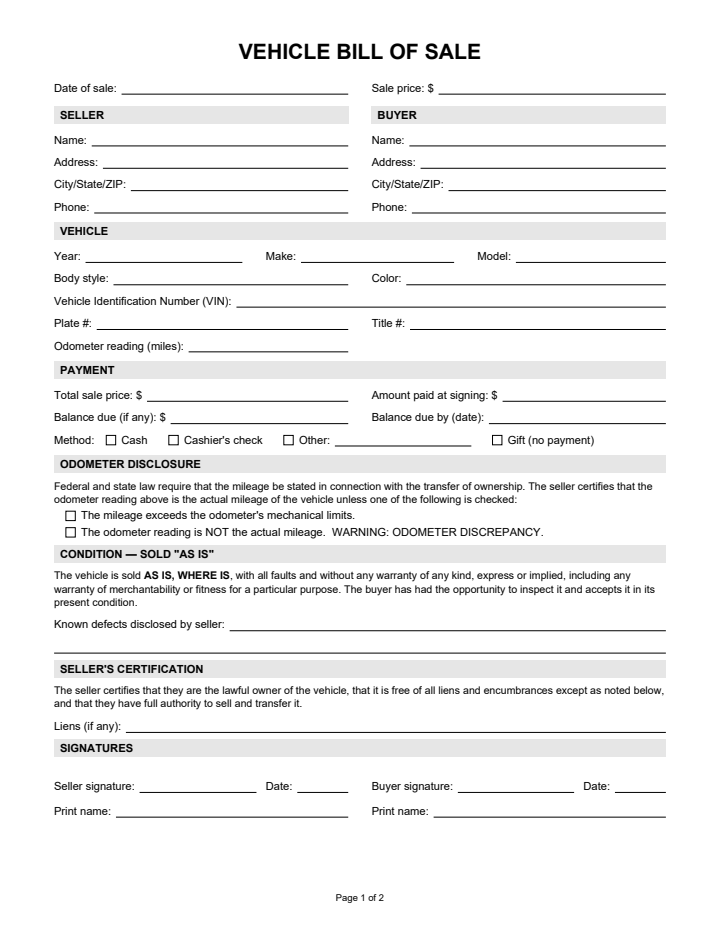
The bill of sale is not the notarized document. It is the record of the deal, and PennDOT itself suggests the seller get a receipt from the buyer acknowledging the title and the vehicle changed hands — which is exactly what this form is.
What Pennsylvania requires
-
Both parties sign the title in front of a notary
Not just the seller. Legal transfer happens when both the seller and the purchaser sign the Pennsylvania title before a notary public. An authorised dealership can verify the signatures instead of a notary in some cases.
-
Do it at a tag service, not a PennDOT counter
Most private transfers go through an authorised PennDOT agent — a tag or messenger service — which notarizes, completes the paperwork and submits it. Meet the buyer there rather than signing anything beforehand.
-
The buyer has 20 days
Title transfer paperwork has to reach PennDOT within 20 days of the notarization. Miss it and the transfer gets harder, so do not sign the title and leave the rest for later.
-
Form MV-4ST carries the price and mileage
Purchase price and mileage are disclosed on the MV-4ST at the time of transfer. The licensing agent completes it and sends it to PennDOT — it is not a form you fill in at home.
-
A $1 sale price invites a review
The Department of Revenue runs a Motor Vehicle Understated Value Program. A nominal price well below fair market value commonly triggers a review, so write the real number on both the MV-4ST and the bill of sale.
Worth knowing
- Never notarize a title with the buyer’s section blank. Both signatures belong on it in front of the notary, at the same time.
- The seller takes the plate off. Pennsylvania registration plates stay with the seller after the transfer, they do not go with the car.
- Get a receipt from the buyer. PennDOT suggests it, and the signed bill of sale is the simplest version — proof the title and the vehicle were handed over on a given date.
- Bring ID. The notary has to identify both of you, so expect to show a driver’s licence.
Questions
Does a Pennsylvania bill of sale need to be notarized?
No — the title does. Both the seller and the buyer sign the Pennsylvania title in front of a notary public, and that is what transfers ownership. The bill of sale is your own record, and page 2 of our template has a notary page if you want one anyway.
Does Pennsylvania require a bill of sale for a private sale?
Not as a separate mandatory form for a Pennsylvania-titled vehicle: the notarized title and the MV-4ST carry the transfer. PennDOT does suggest the seller obtain a receipt from the buyer, and a signed bill of sale is that receipt.
How long does the buyer have to transfer the title?
Twenty days from the date of notarization to get the paperwork to PennDOT.
Can I write $1 on the paperwork?
Not on a real sale. The Department of Revenue reviews transfers where the stated price is well below fair market value, and a nominal figure is the usual trigger.
Checked against Pennsylvania’s own motor vehicle agency in November 2026. Rules change — confirm on the official pages listed before you rely on this, and treat it as general information rather than legal advice.