
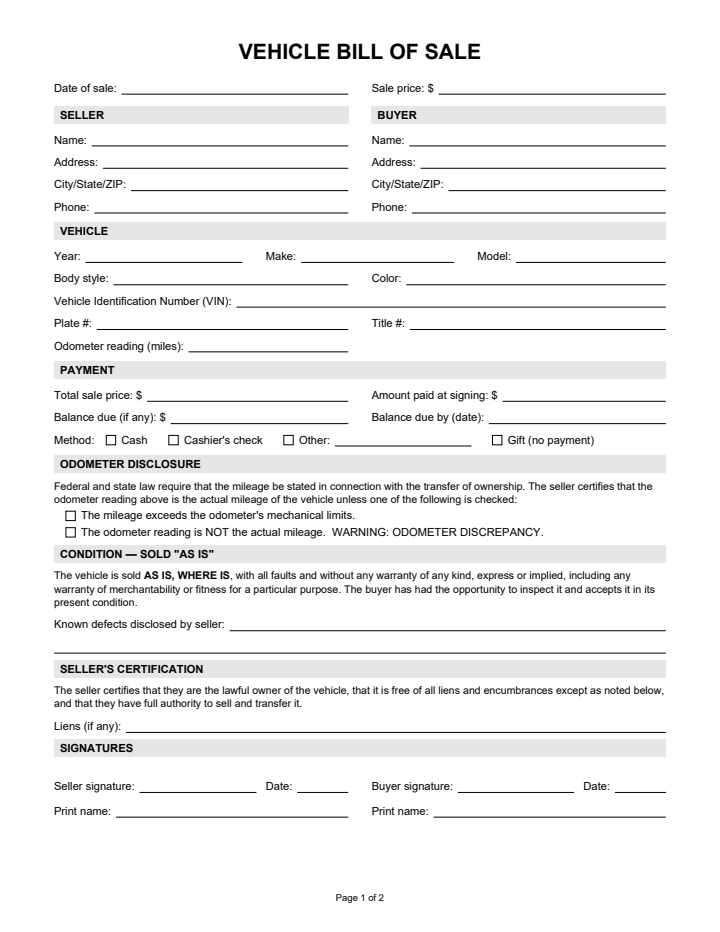
This template is a single printable page, plus a second page for a notary if your state requires one. Print two copies so the buyer and the seller each keep a signed original.
It's a fillable PDF: type into it in Acrobat, Preview or your browser and save the finished copy, or print it blank and fill it in by hand.
What's on the form
- Seller and buyer names, addresses and phone numbers
- Year, make, model, body style and color
- Vehicle Identification Number (VIN), plate number and title number
- Odometer reading, with the federal disclosure wording and its two exception boxes
- Sale price, amount paid at signing, any balance due, and payment method
- An as-is clause with a line for known defects
- A seller's certification that the car is owned free of liens
- Signature and date lines for both parties
How to fill it out
-
Read the VIN off the car, not the paperwork
The VIN is on a plate where the dash meets the windshield on the driver's side, and on a sticker in the driver's door jamb. Copy it from there and check it against the title. A single wrong character is the most common reason a transfer gets rejected at the counter.
-
Write the odometer reading at the moment of sale
Federal law requires the mileage to be stated when ownership transfers. Write the number exactly as the dash shows it, with no rounding, and check a box only if the reading is wrong or the odometer has rolled past its limit.
-
Put the real price on the form
Both sides sign this, and in most states the buyer pays sales tax on the amount written here. Understating the price to lower tax is tax fraud, and it also caps what the buyer can claim if the sale goes wrong.
-
List any defects you know about
"Sold as is" protects a seller from claims about faults the buyer could have found by inspecting the car. It does not protect a seller who actively hid a known problem. Writing the bad transmission on the form is what makes the as-is clause hold up.
-
Fill the blanks you aren't using
Write N/A or draw a line through any blank line before signing, so nothing can be added to the document afterwards.
Before you hand it over
- The bill of sale does not transfer ownership. The signed title does. Sign the title over at the same time, and never hand over the car without it.
- File a release of liability. Most states let a seller report the sale online within a few days. Until you do, tickets, tolls and abandoned-vehicle fees can still come to you.
- Some states have their own form. A handful require an official state bill of sale, and a few require notarization. Check your DMV's site before the meeting.
- Take payment that clears. Cash or a cashier's check verified at the issuing bank. A personal check can bounce days after the car is gone.
Questions
Does a car bill of sale need to be notarized?
In most states, no. A few require it, and some require it only in certain situations. Page 2 of this template is a notary acknowledgment you can use if yours does — otherwise leave it blank or don't print it.
Can I sell a car without a title?
Usually not. Most states require the signed title to transfer ownership, and a bill of sale alone won't let the buyer register the car. If the title is lost, apply for a duplicate from your DMV before selling.
Who keeps the bill of sale?
Both of you. Print two copies and have both signed, so each side has an original. The buyer usually needs theirs when registering the car.
Do I need a bill of sale if I'm gifting the car?
Yes, and it's worth doing. Tick the gift box on the form and write $0 or "gift" as the price. Many states tax gifted vehicles differently, and the paperwork is what proves no money changed hands.