
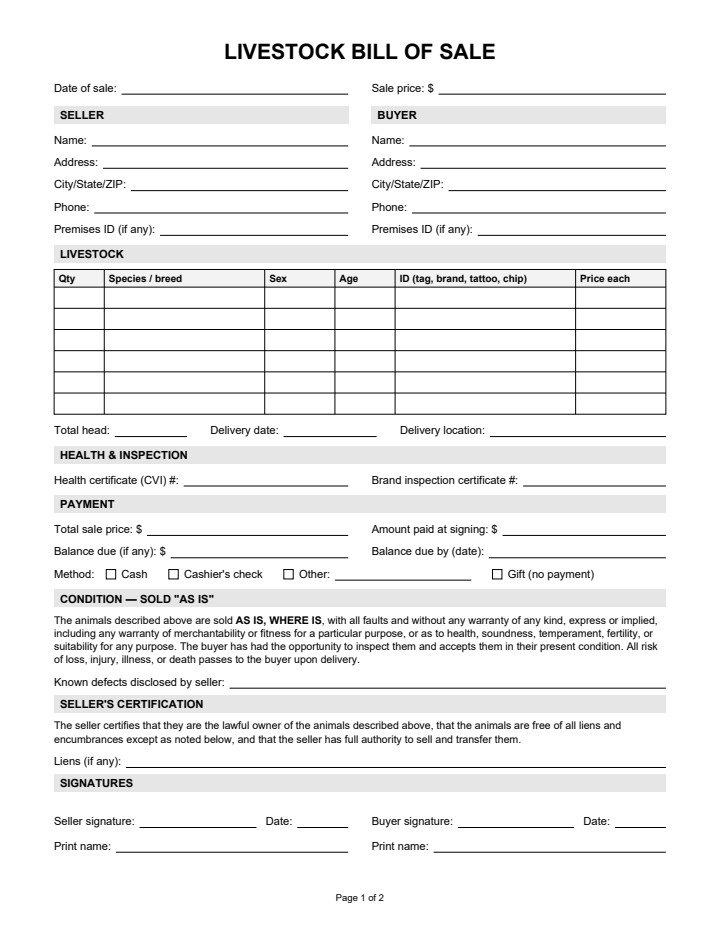
This template has a six-row table for the animals, plus space for the health and inspection paperwork that travels with them.
It's a fillable PDF: type into it in Acrobat, Preview or your browser and save the finished copy, or print it blank and fill it in by hand.
What's on the form
- Seller and buyer details, with a line for premises ID
- A six-row table: quantity, species or breed, sex, age, identification and price each
- Total head, delivery date and delivery location
- Health certificate (CVI) number
- Brand inspection certificate number
- Price, payment method and balance due
- An as-is clause covering health, soundness, temperament and fertility
- Seller's certification of ownership and signature lines
How to fill it out
-
List the animals precisely
One row per animal or per uniform group. Species and breed, sex, age, and the ear tag, brand or tattoo that identifies each one. Price each, so the total is verifiable.
-
Record the brand inspection if your state requires one
Most western states require a brand inspection when cattle or horses change owners or cross county or state lines. The certificate number goes on the form, and the certificate itself travels with the animals.
-
Add the health certificate for any interstate move
A certificate of veterinary inspection is generally required to move livestock across state lines, and some species need specific tests. Your vet or state agriculture department can confirm what applies.
-
Agree the delivery point and date
Where and when the animals change hands decides who carries the risk if one is injured or dies. This form passes risk to the buyer at delivery.
-
Write down anything you know
Recent treatment, vaccination status, whether a cow is bred and when she's due, a known temperament problem. Buyers rely on it, and concealment undercuts the as-is clause.
Before you hand it over
- Brand inspection rules are state law, and the penalties for skipping one can include seizure of the animals. Check before hauling.
- Premises ID and tagging rules apply to some species and movements, particularly for disease traceability.
- Interstate movement almost always needs a CVI from a vet, issued shortly before travel.
- Auction sales have their own paperwork. This form is for private treaty sales between two people.
Questions
What is a brand inspection?
In brand-law states, an official check that the person selling the animals actually owns them. It's usually required when cattle or horses change hands or move out of the area, and the certificate travels with the animals.
How many animals fit on this form?
The table has six rows, and a row can cover a uniform group. For a bigger lot, attach a numbered list and write "see attached schedule" in the table.
Do I need a health certificate to sell locally?
Usually not within a state, though some states and species have exceptions. Interstate moves nearly always require one.