
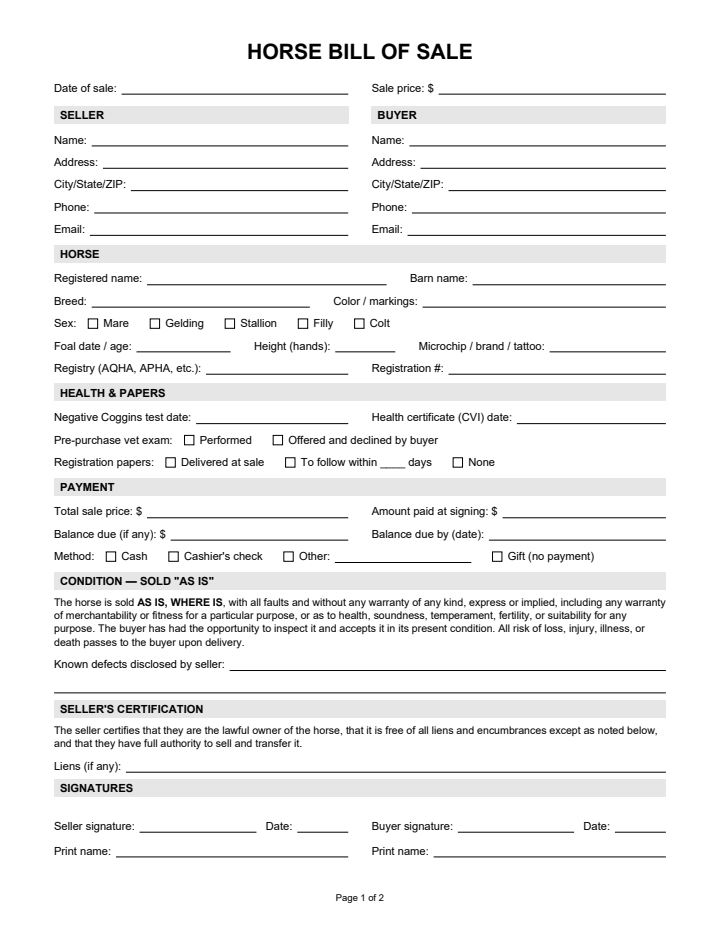
This template covers all three, plus the awkward conversations worth having in writing: who had the vet check, when the registration papers arrive, and who carries the risk after loading.
It's a fillable PDF: type into it in Acrobat, Preview or your browser and save the finished copy, or print it blank and fill it in by hand.
What's on the form
- Seller and buyer names, addresses, phone numbers and emails
- Registered name and barn name
- Breed, color and markings
- Sex: mare, gelding, stallion, filly or colt
- Foal date or age, height in hands, and microchip, brand or tattoo number
- Registry and registration number
- Negative Coggins test date and health certificate (CVI) date
- Whether a pre-purchase vet exam was done or declined, and when registration papers transfer
How to fill it out
-
Describe the horse so a stranger could identify it
Registered name, barn name, breed, age, height, color and markings. Add the microchip, brand or tattoo number if there is one. Unlike a car, the description is the identification.
-
Record the Coggins date
A negative Coggins test for equine infectious anemia is required to cross state lines and at most shows and boarding barns. Write the date of the current test and hand over the paperwork.
-
Settle the papers question in writing
Registration papers are separate from the horse. Tick whether they're handed over at the sale, follow within a set number of days, or don't exist. "He's registered" with no papers is a common dispute.
-
Note the vet exam, either way
Tick whether a pre-purchase exam was done or offered and declined. A buyer who declined an exam has a much harder time claiming later that the horse was unsound at sale.
-
Be honest about vices and history
Cribbing, weaving, trailer problems, a history of lameness, past colic surgery. Write them on the defects line. The as-is clause covers what a buyer could discover; it doesn't cover concealment.
Before you hand it over
- "As is" covers more with animals. This form's clause says there's no guarantee of health, soundness, temperament or fertility, and that risk passes to the buyer at delivery.
- Check your state's equine liability law. Many states require specific warning language on signs and contracts for equine professionals.
- Moving a horse across state lines needs a health certificate (CVI) from a vet, usually issued within 30 days of travel, plus the Coggins.
- A trial period or payment plan belongs in a separate written agreement, spelling out who pays for care, vet bills and insurance while the horse is away.
Questions
Do I need a bill of sale to buy a horse?
No law requires one in most places, but it's the only record of what was agreed. Boarding barns, insurers and registries may all ask for proof of ownership.
What is a Coggins test?
A blood test for equine infectious anemia. A current negative Coggins is required for interstate travel and by most shows, barns and events.
Does this form transfer the registration papers?
No. Each registry has its own transfer process and form. This records what was agreed about the papers; the registry paperwork still has to be signed and filed.
What if the horse turns out to be unsound?
That's what the as-is clause and the vet exam checkbox are about. A buyer who declined an exam and signed an as-is sale has limited recourse, unless the seller concealed a known problem.