
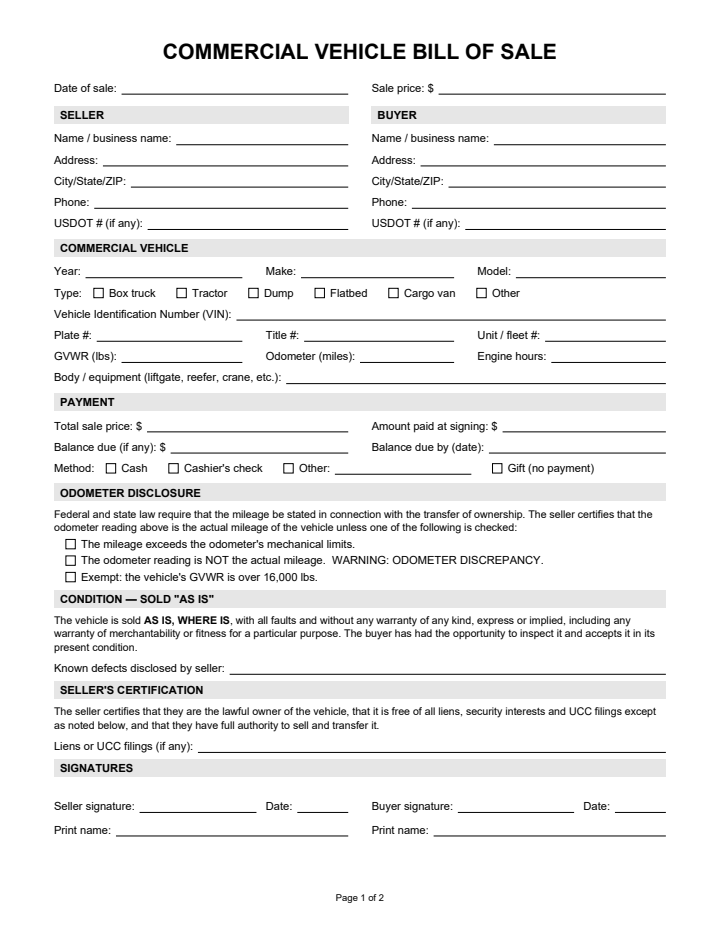
This template records what a commercial sale actually turns on — the VIN and unit number, the weight rating, the hours as well as the miles, the equipment on the body, and a seller's statement that there are no UCC filings against it.
It's a fillable PDF: type into it in Acrobat, Preview or your browser and save the finished copy, or print it blank and fill it in by hand.
What's on the form
- Seller and buyer details, with business names and USDOT numbers where they apply
- Year, make and model, and a type checkbox for box truck, tractor, dump, flatbed, cargo van or other
- VIN, plate, title number and your unit or fleet number
- GVWR, odometer reading and engine hours
- Body and equipment: liftgate, reefer unit, crane and anything else mounted on it
- Price, payment method and any balance due
- Odometer disclosure, including the exemption for vehicles rated over 16,000 lbs
- An as-is clause and a seller's certification covering liens and UCC filings
How to fill it out
-
Search for UCC filings before you pay
This is the step that matters most and the one buyers skip. Equipment finance is registered with the Secretary of State in the seller's state, not written on the title, and a lender with a filing can repossess the truck from a buyer who paid in full. The search is public and usually free.
-
Record the GVWR, not just the weight
Gross Vehicle Weight Rating drives registration class, which licence the driver needs, and whether federal odometer disclosure applies at all. It is on the door jamb plate.
-
Write the odometer reading, or tick the exemption
Federal odometer disclosure does not apply to vehicles with a GVWR over 16,000 lbs, which covers most medium and heavy trucks. The form has a box for that, so tick it rather than leaving the line blank and leaving a buyer guessing.
-
Log the hours on anything with a PTO
A truck with a crane, a reefer unit or a packer body wears by hours, not miles. Two trucks with the same mileage can be years apart in real use.
-
List the equipment and who owns it
Liftgates, reefer units, toolboxes, racks and cranes are often financed or leased separately from the chassis. Write down what is included, and say so if anything on the truck is not yours to sell.
Before you hand it over
- UCC liens follow the vehicle, not the seller. Search the Secretary of State database in the seller's state before money changes hands.
- Over 16,000 lbs GVWR, federal odometer disclosure does not apply — but your state may still ask for the reading, and buyers certainly will.
- Business sales need the right signer. If a company owns the truck, the person signing should have authority to sell on its behalf, and the business name belongs on the form.
- Remove your USDOT number and markings before the truck leaves, or your authority stays on a vehicle you no longer control.
Questions
Is a commercial vehicle bill of sale different from a regular one?
Yes, in the details that matter. It records GVWR, unit number, engine hours and mounted equipment, it handles the federal odometer exemption for heavy trucks, and its lien clause covers UCC filings rather than just title liens.
Do I need an odometer reading on a heavy truck?
Federal rules exempt vehicles with a GVWR over 16,000 lbs from odometer disclosure. Many states and nearly all buyers still want the number, so record it and tick the exemption box if it applies.
How do I check a truck for a lien?
Search UCC filings on the Secretary of State website for the state where the seller is based, using the business name and the VIN. The search is public, usually free, and takes minutes.
Can a company sign this, or does it need a person?
A company signs through a person with authority to bind it. Put the business name on the form and have that person print their name and title alongside the signature.